
Inflation Outpaces Wages
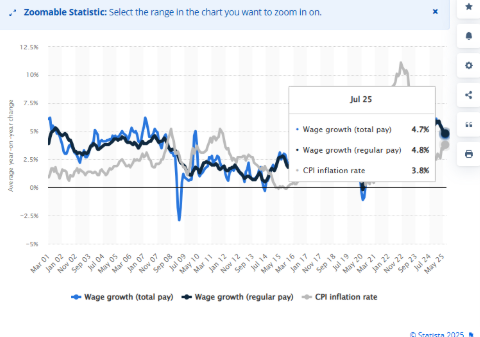
Across the UK, families are feeling the sharp sting of inflation. Even with families working hard to keep the lights on, the paychecks just aren't stretching as far. As inflation continues to hold around 4% as of August 2025, many households are being constrained with tighter budgets and fewer financial cushions.
In Oxfordshire, the situation is even more grim, as local housing costs soar, energy bills continue to rise and childcare expenses push families to the brink. Households, once able to afford more discretionary spending, are now being forced to prioritise basic needs. Let’s take a look at how inflation is affecting families in the UK and how it’s trickle down effect can be felt in Oxfordshire.
The National Picture: Inflation vs. Wage Growth
Inflation in the UK has jumped to an eye-watering 3.8% from 2.2% in 2024. Meanwhile, wages have barely kept up, growing by just 4.8%. The ground reality is that even though people are working longer hours to cover bills, wages are still shrinking.
So, how does this affect families? Well, more money is being spent on basics like food, housing and utilities. As a result, savings are down, and families are cutting back on non-essentials like family holidays and kid’s education savings. With inflation driving up the costs of everything from groceries to heating, many households are barely keeping their heads above water.
The Local Picture: Rising Cost of Living in Oxfordshire
In Oxfordshire, families are facing their own set of challenges. Housing is a major issue. The Thame Area Housing Needs Survey 2025 revealed that affordable homes are in short supply, leading to rising rent and property prices. For families looking to purchase a home the housing crisis is making it an impossible dream. In fact, Oxford has seen property prices increase by 2.8% and rent prices rise by 11.7% in the last year alone.
It’s no longer just about finding a roof over your head. Families in Oxfordshire are also facing surging energy bills. Under the June to September 2025 direct debit price cap the average annual bill for typical gas and electricity consumption is £1,720. This is well below the peak level of £2,380 level under the Energy Price Guarantee from October 2022 to June 2023, but still 42% higher than in Winter 2021/22. This is proving to be a burden particularly for families who are already struggling with rising housing costs .
And then there’s childcare. Families are now paying around £1,000 a month for full-time childcare, making it one of the biggest expenses for working parents. For many, childcare costs are eating into their budget, leaving little left for savings or other essentials.
The Strain on Local Families: Stories from Oxfordshire
If you want to understand just how much families in Oxfordshire are struggling, look no further than local stories.
The Smith family from Thame has seen their rent go up by £200 in the past year. As Emma Smith puts it, "We used to save for holidays, but now we’re just surviving month to month. It’s a constant battle." With affordable homes becoming increasingly scarce in the area, homeownership feels like a far-off dream, with prices continuing to climb.
Then there's John Matthews, a father of three living in Oxford. "Childcare is swallowing up so much of our income. We’re paying nearly £1,000 a month. That’s money we could be using for savings or other things." For families like the Matthews, rising childcare costs are a huge barrier to financial security, with little relief in sight.
These personal stories shed light on the reality for many Oxfordshire families, where the growing cost of living is leaving people with less financial freedom. Inflation continues to outpace wages, and even basic financial security is slipping out of reach.
Long-Term Effects: Reduced Savings, Pension Gaps, and Inheritance Planning
The financial challenges families are facing today aren’t going to disappear anytime soon. In fact, many of the pressures families are dealing with now will have long-term effects.
With rising living costs eating into savings, many families are putting off important financial commitments, like contributing to their pensions. Reducing savings today means smaller retirement pots in the future, leaving families vulnerable when they need it most.
Financial analysts point out that today’s squeeze will have long-term effects. Reduced saving now means smaller pensions later, while heavy reliance on property wealth leaves families vulnerable if housing prices stall or fall. The impact of inflation today may therefore be felt decades into the future.
“At times like this, we advise clients to stay disciplined with savings, keep pensions on track, and make sure money is held in the most tax-efficient places possible. That is how households can reduce the burden of inflation,” said advisers at PMW wealth management firm.
And for those relying on property wealth as a safety net, it’s crucial to be cautious. Housing prices may not continue to rise indefinitely, and if the market stalls, many families could find themselves in a vulnerable position.
If there’s one takeaway, it’s that families need to rethink how they approach financial planning. This isn’t just about managing today’s bills, it’s about securing future stability.
Local Resources for Oxfordshire Families Struggling Finances
For families in Oxfordshire facing rising costs, the Oxfordshire County Council offers assistance with energy bills, food banks, and housing support, which can help ease the financial burden.
National programs like Universal Credit are also designed to support low-income families, providing a safety net during difficult times. Families can also access financial advice and support through local charities and financial advisers who can help them navigate the current economic climate.
Conclusion: A Challenging Road Ahead
The financial pressures facing families in Oxfordshire, and across the UK, are not going away anytime soon. With inflation continuing to outpace wages, households are struggling to keep up with rising costs. From housing to childcare to utility bills, families are bearing the brunt of the financial squeeze.
But there is hope. By staying disciplined with savings, prioritising pensions, and seeking professional financial advice, families can better navigate these challenging times. Long-term financial planning is key to weathering the storm and securing a more stable future.
In the face of inflation, it’s crucial for families to take action now, before their financial situation becomes even more precarious.