Greyhound racing has long been a popular sport in the UK and some other countries. Dating back to the early 20th century, this sport attracts fans and bettors who enjoy the unpredictability it offers – but why is this the case?
The relatively low profile
The first thing to note is that greyhound racing isn’t as widely covered as some other sports. This relatively low profile means that not everyone knows about the favourites. While the biggest horse names in the world are widely discussed online, you need to dig deeper to find out more about the top greyhounds.
Anyone who wants to bet on greyhound racing may feel that it’s possible to get an advantage by doing in-depth research to work out which odds are most favourable for them. You can click here to find out more about the current odds for races at places such as Swindon, Romford and Harlow. There are various races at UK tracks on most days, with international meets also listed.
The availability of online betting has been one of the factors that has helped introduce the sport to more people, with live streaming of the races also providing a boost to its profile. If it continues to grow in popularity, we may start to see greyhound racing play a bigger part in the mainstream sports news. It would then be easier for fans to track the latest results, form and other relevant factors.
Unpredictability is one of the main reasons why greyhound racing appeals to many people. It offers an enjoyable experience where every race has the possibility or providing a major upset.
Short tracks and the potential for bunching together
If we compare greyhound racing to horse racing, we can immediately see some similarities and differences between them. Longer horse races tend to be more predictable, as the greater distance means that there’s more time for the stronger, faster horses to overcome a poor start or any other setbacks along the way.
Greyhound races are run over tracks that can range from 300 yards to 1,100 yards, with different shapes and surfaces used. This variety is a way of playing to the strengths of different dogs, but the relatively short track means that it’s more difficult for any of the runners to recover from a poor start.
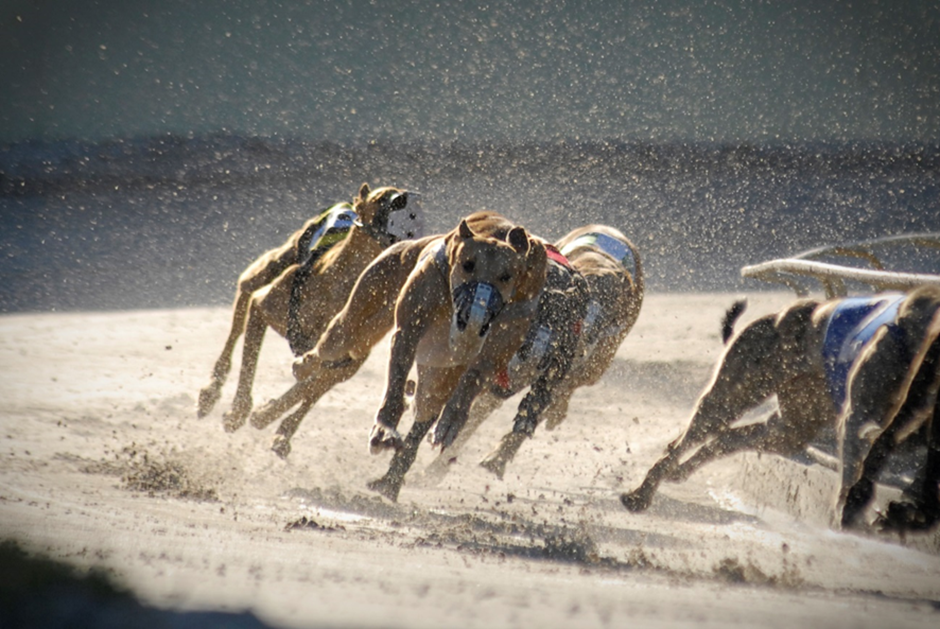
Greyhounds tend to bunch together when running, which can cause problems when they enter the first turn. If the favourite gets caught up in a bunch, it can be impossible for them to recover and win the race. Meanwhile, an underdog may get ahead at the start of the race and maintain this position if the faster dogs behind get bunched up and slow down.
Fast acceleration but less staying power
The fastest speed ever recorded for a greyhound was set in Australia in 1994, at 41.83 mph. These animals have incredible acceleration and can beat a horse over a short distance. However, the horse would win over a long distance because of its greater endurance and the way that they can maintain their top speed for longer.
Greyhound races are unpredictable because the dogs tend to run extremely fast in short bursts but struggle to maintain that speed. This can cause the leader to run out of steam, while another runner may appear from out of nowhere to overtake them with a burst of speed. It’s not like the Thames Urban Race, where staying power and endurance are the key attributes for runners.
The typical greyhound race categories are sprints, middle-distance, stayers and marathons. The final category is the longest, with eight bends or more. You might feel that the longer races give the best dogs the chance to show their speed, but these are still quite short and unpredictable.