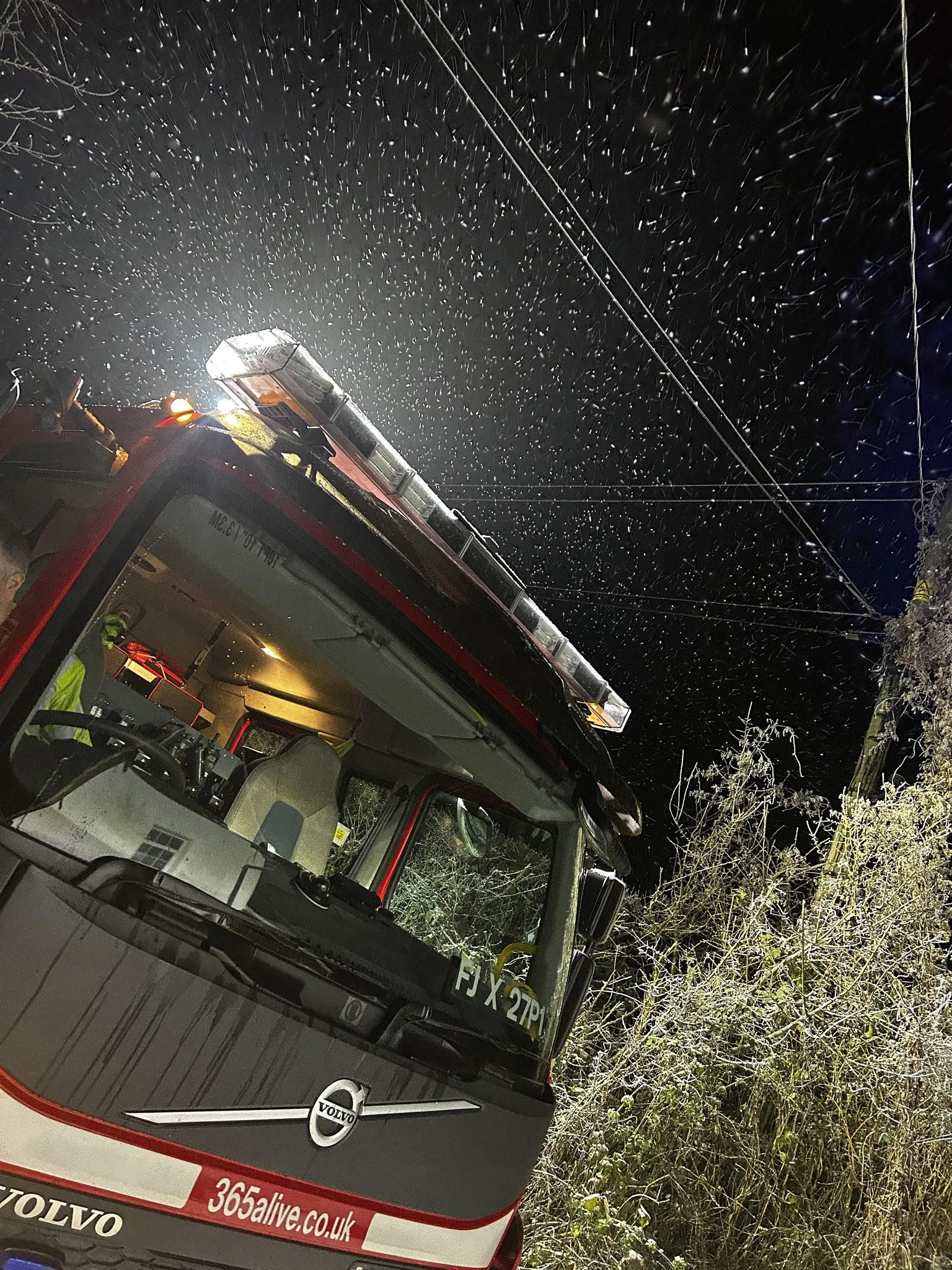
The flurry of snow we had last night in and around Thame is a timely reminder, that driving in winter is very different than in other times of the year. Adverse weather and longer periods of darkness makes driving more hazardous. This means that we need to adapt the way we drive to the conditions.
Take a look at the RoSPA tips for driving in snow and ice below:
 Reduce your speed. The chances of skidding are much greater and your stopping distance will increase
massively.
Only travel at a speed at which you can stop within the distance you can see to be clear. Speed limits are the maximum in ideal conditions; in difficult conditions, they can often be too fast.
Avoid harsh braking and acceleration, or sharp steering.
Always reduce your speed smoothly and in plenty of time on slippery surfaces. Slow down in plenty of time before bends and corners.
Braking on an icy or snow covered bend is extremely dangerous. The centrifugal force will continue to
pull you outwards and the wheels will not grip very well. This could cause your vehicle to spin.
To slow down on ice and snow, lift the gas early to allow the speed to drop sufficiently to select a lower gear. If you need to use the brakes, use very gentle pressure depressing the clutch early to avoid stalling the engine.
Increase the gap between you and the vehicle in front. You may need up to TEN TIMES the normal distance for braking.
Keep your vehicle well-ventilated. The car heater turned up full can quickly make you drowsy.
In snow, stop frequently to clean the windows, wheel arches, lights and number plates.
Visibility will probably be reduced, so use dipped headlights.
During wintry weather, road surfaces are often wet and/or covered in frost and ice or snow. But this does not occur uniformly. A road will often have isolated patches of frost or ice after most of the road has thawed – this commonly occurs under bridges.
For more winter driving tips see link below: