7th January 2026
The start of 2026 marked a moment of reflection for Cuttle Brook Conservation Volunteers (CBCV), following what proved to be a significant and successful year for the group and the local nature reserve. Throughout 2025, CBCV recorded encouraging signs that long-term conservation efforts were paying off, with notable gains in wildlife diversity and habitat quality.
One of the clearest indicators of success came from the annual bird survey carried out in May. The survey produced some of the strongest results to date, both in the total number of birds recorded and in the range of species observed. Particularly rewarding was the confirmation that several relatively recent arrivals, including Cetti’s warblers and little egrets, had become regular visitors to the reserve.
The reserve’s plant life also showed positive developments. Several new plant species were added to the official list, with moisture-loving plants colonising newly created scrapes despite the challenges posed by extended drought conditions. Insects also featured strongly during the year, with a number of new species recorded. Although further identification work was needed to fully assess these findings, a standout moment came when volunteer John Morris discovered and photographed a brown hairstreak butterfly on the reserve.
Otters continued to thrive in the area, although their secretive nature meant sightings remained rare. Their success was thought to be linked to ongoing improvements to the brook and strong fish survey results recorded by both the Environment Agency (EA) and the River Thame Conservation Trust (RTCT). CBCV described its close working relationship with both organisations—particularly RTCT—as empowering and highly effective.
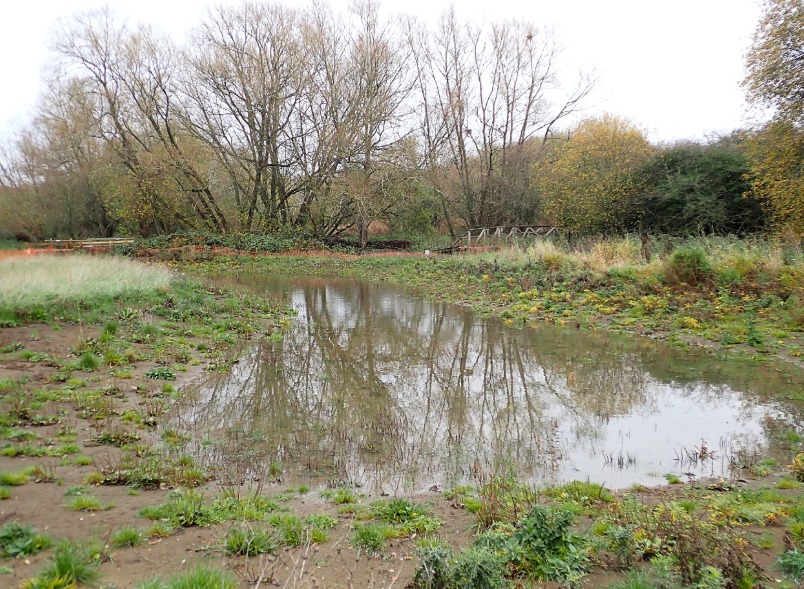
During the year, RTCT carried out major improvements to the brook, including the removal of a redundant weir that had been blocking fish passage and the creation of two new scrapes within the reserve. These efforts were complemented by CBCV’s installation of four in-flow deflectors, designed to reduce silt build-up and improve habitat conditions for invertebrates and fish. Fish populations responded quickly to these changes, with further improvements planned for the future.
Not all ecological changes were welcomed. Significant effort in 2025 was devoted to removing invasive Himalayan balsam from downstream sections of the brook, an ongoing challenge that was expected to continue. The arrival of ring-necked parakeets in the area was also viewed as problematic, with residents asked not to feed the birds should they appear in gardens.
Encouragingly, there were once again no signs of invasive American mink on the reserve. This absence offered renewed hope for the long-term goal of establishing water voles in designated quiet, “nature-first” areas, particularly after RTCT reported that water voles had recently been filmed elsewhere in the Thame catchment.
Protecting and enhancing wildlife corridors remained a central priority. While parts of the reserve were managed as undisturbed habitat, CBCV also focused on creating safe routes for birds, mammals and invertebrates moving between the River Thame and surrounding areas. Funding from the Trust for Oxfordshire’s Environment enabled the installation of a new fence and hedgerow alongside the upstream scrape near Watkins’ Bridge. Once established, the hedge was expected to provide both a protected habitat and a vital wildlife connection through the southern meadow.
Looking ahead, CBCV outlined plans to build on this momentum in 2026. Proposed work included installing additional in-flow deflectors, reducing excessive shading from bankside shrubs to allow more light into the brook, and collaborating with RTCT to introduce gravel to selected sections of the brook bed. Trail cameras supplied by RTCT were also set to play a key role in monitoring wildlife activity around the developing scrapes.
Attention was also directed towards Rycote and Nontron Meadows, identified as the reserve’s most important wildflower meadows. CBCV expressed hopes that a light grazing regime could be introduced alongside the annual hay cut, a long-standing aspiration that might finally be realised in 2026.
CBCV used the annual review to acknowledge the strong partnerships that underpinned its work. Thame Town Council was thanked for its generous and essential support, as were councillors and council staff. RTCT was also recognised for providing expert guidance and hands-on assistance throughout the year.
Finally, CBCV paid tribute to its volunteers, described as the heart and soul of Cuttle Brook Local Nature Reserve. The group confirmed that new volunteers were always welcome, with regular work parties held at 10:00 a.m. on the third Sunday and last Wednesday of each month, meeting at the Scout Hut car park.
As the group looked ahead, CBCV expressed optimism that the progress made during 2025 would continue into 2026 and beyond.