
Geopolitical tensions have long influenced financial markets by creating waves of uncertainty that push investors toward assets with enduring value. Precious metals like gold and silver often emerge as favored options in these scenarios, appreciating as people seek protection from potential economic fallout. This pattern arises from a blend of fear driven demand and real disruptions in global trade or supply chains.
In the current climate of 2025, marked by persistent conflicts in Eastern Europe and the Middle East alongside trade disputes, grasping this interaction proves vital for portfolio management. Drawing from historical data, recent studies, and market observations, this article breaks down the responses of precious metals to such risks, providing actionable insights to help readers position themselves effectively during unstable periods.
The Role of Precious Metals as Safe Havens
During geopolitical upheavals, precious metals attract attention because they represent tangible wealth detached from national policies or currency fluctuations. Gold stands out for its historical reliability in safeguarding assets when trust in traditional systems wanes. As disputes intensify, capital flows away from volatile stocks or bonds and into metals that can be owned outright or via financial instruments. Analyses point to this behavior stemming from worries over inflation spikes, resource shortages, and broader instability that conflicts typically trigger. Central banks frequently bolster this trend by accumulating gold reserves to hedge against currency devaluation.
Silver mirrors this appeal but introduces more variability due to its dual role in industry for applications like renewable energy and electronics. Platinum and palladium respond similarly, especially when disruptions hit mining areas, though their price movements lean heavily on industrial supply demands rather than just investor sentiment. Collectively, these metals aid in diversification, frequently countering declines in equity markets and contributing to overall portfolio stability in crisis situations.
Historical Patterns of Response
Examining past events reveals consistent upticks in precious metal values amid geopolitical strains. The 1973 Yom Kippur War and ensuing oil embargo exemplify this, with gold prices doubling as energy costs ballooned and economic confidence eroded. The 1979 Iranian Revolution triggered another major rally, sending gold soaring amid oil supply fears and regional chaos. In modern times, Russia's 2014 move into Crimea prompted a swift 14 percent climb in gold as sanctions loomed and markets braced for escalation. The 2022 invasion of Ukraine echoed this, with immediate surges in both gold and silver as global sanctions disrupted commodities and heightened inflation concerns.
Silver has shown parallel reactions, often amplifying gold's gains due to its sensitivity to industrial disruptions. For platinum and palladium, events in key producing nations like South Africa or Russia have led to sharp supply driven increases, as seen in palladium's record highs during politically fueled mining halts. A comprehensive review using geopolitical risk metrics demonstrates that elevated tension levels correlate with around 2.5 percent higher returns for gold, establishing a measurable connection across decades.
Key Geopolitical Events and Their Impact on Prices
To illustrate these patterns more clearly, the following table summarizes the influence of select geopolitical events on precious metal prices, focusing on gold and silver where data is prominent. Percentages reflect approximate changes during the peak response periods, based on historical records and analyses.
| Event | Year | Brief Description | Gold Price Change (%) | Silver Price Change (%) |
| Yom Kippur War and Oil Crisis | 1973- 1974 | Arab-Israeli conflict led to OPEC embargo, spiking energy costs globally | +100 (from ~$97 to $195 per ounce) | +150 (significant rise tied to inflation fears) |
| Iranian Revolution | 1979 | Overthrow of Shah caused oil disruptions and regional instability | +126 (from ~$218 to over $500 per ounce) | +300 (industrial demand amplified volatility) |
| Crimea Annexation | 2014 | Russia's seizure prompted Western sanctions and market unease | +14 (brief surge to ~$1,382 per ounce) | +10 (followed gold but with less intensity) |
| Russia-Ukraine Invasion | 2022 | Full-scale conflict disrupted supplies and fueled sanctions | +10 (from ~$1,800 to over $2,000 per ounce initially) | +15 (gains from safe-haven and supply concerns) |
These figures highlight how events trigger rapid appreciations, though durations vary. Gold's changes are drawn from market data during the immediate aftermath, while silver often experiences steeper swings due to its commodity ties. Investors can use this as a reference to anticipate similar reactions in ongoing situations.
Mechanisms Driving Price Movements
The underlying drivers include diminished faith in major currencies during crises, particularly the dollar, which encourages diversification into non paper assets. Conflicts frequently incite inflation through higher commodity expenses or policy responses, positioning gold as a premier hedge. Monetary easing by central banks to counteract slowdowns lowers opportunity costs for holding metals, enhancing their draw. On the supply front, turmoil in extraction zones curtails output, elevating prices for silver and platinum group metals reliant on consistent production. Behavioral factors amplify this, as panic buying via funds creates momentum.
That said, reactions can fade if resolutions appear imminent, leading to pullbacks after initial rallies. Recognizing these triggers allows for better timed entries, avoiding knee jerk decisions based solely on headlines.
Current Trends in 2025
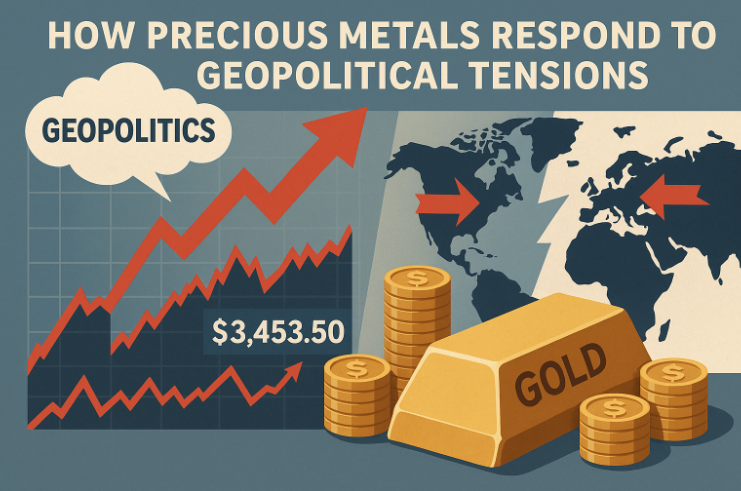
This year, sustained pressures from Ukraine and Middle Eastern flare ups, plus U.S. China tariff escalations, have sustained upward pressure on precious metals. Gold has excelled, with the XAU/USD price hitting 3,453.50 dollars per ounce lately, reflecting a 0.59 percent daily gain amid fresh instability reports. Silver's 25 percent year to date advance stems from investor inflows and mining bottlenecks tied to tensions. Platinum and palladium have varied, benefiting from defense sector needs but hampered by economic slowdowns in affected areas. According to World Bank metrics, precious metal indices rose 8 percent in the year's first half, largely attributable to these factors. Accumulations by banks in Asia further support this trajectory, part of efforts to reduce dollar exposure.
Challenges and Strategic Considerations
Despite their strengths, precious metals carry risks like pronounced short term fluctuations and holding expenses for physical forms. Excessive focus here might forgo rebounds in stocks post crisis. A balanced approach, capping exposure at 5 to 15 percent based on individual profiles, mitigates this. Tracking indicators such as risk indices or uncertainty gauges aids in forecasting shifts, while options like futures offer leverage with inherent cautions.
Conclusion
Precious metals reliably step up during geopolitical tensions, acting as stabilizers when worldwide events disrupt norms. Historical and current examples, including the tabled impacts, show their capacity to safeguard value amid chaos. Through various market phases I've witnessed, these assets have frequently delivered essential support, enabling endurance through downturns that erode other holdings. Nevertheless, they demand judicious use within a diversified framework to avoid pitfalls. In today's 2025 setting, a thoughtful allocation to them appears wise, fostering security while pursuing sustained growth objectives.